вторник, 23 сентября 2014 г.

Jaime Hayon

Hayon, 32, has been busy. After the Spaniard's imaginative "Mediterranean Digital Baroque" exhibit opened in London in 2003, he left his job as head of design at Fabrica, the creativity hub run by Benetton, and started his own studio in Barcelona. A slew of diverse projects followed. There have been artistic installations throughout Europe, projects for companies like Coca-Cola and Adidas, and the AQHayon Collection for ArtQuitect, a line of bathroom fixtures widely praised for its whimsical sensibility—in stark contrast to the trend at the time. Hayon defines himself as an artist, not a designer. "I think design can be much more like art. I work with intuition. If they say white, then I go black," he says. "And maybe in that black, there's a little bit of white.http://www.hayonstudio.com/design/

Nirav Modi Flagship Boutique


La Terraza Del Casino

The Restaurant La Terraza del Casino (Madrid, Spain) presents its spectacular new look. An interiors project by Jaime Hayon that explores the balance of an aesthetic link between past and future using his very personal style that connects harmoniously with the imaginative and innovative kitchen of the outstanding chef: Paco Roncero. 


Marc Newson

Australia native Newson is the poster child for the much hyped "design art" boom. In 2006 he made headlines for his mega-sale at Sotheby's: his Lockheed Lounge sold for $968,000, the highest price ever paid at auction for the work of a living designer. Then in January, Gagosian, the blue-chip New York City gallery behind artists like Jeff Koons and Richard Serra, devoted a one-man show to Newson. But it's his everyday products—bottle openers, soap dishes, flashlights, hair dryers, hangers—that have made his futuristic forms, if not his name, familiar to so many people. These days Newson, 43, is busy with his duties as creative director for Australia's Qantas Airways. He has his hand in everything from the new airport lounges in Sydney and Melbourne to the in-flight freebies.


Patricia Uriquiola

Born in Spain and trained as an architect in Madrid and Milan, Urquiola, 45, was mentored by architect Achille Castiglioni. After a stint at De Padova, where she worked with Vico Magistretti, she opened her own Milanese studio in 2001, bringing her playful geometry to furniture for companies like Moroso, Kartell, and Molteni & C. Seating that is elegant, imaginative and still sublimely comfortable has been Urquiola's specialty, but she has worn many other hats, creating watches and housewares for Alessi, crocheted rugs for Paola Lenti, lighting for Foscarini Murano and bathroom fixtures for Agape. Next up is the Tufty-bed for B&B Italia


Marcel Wanders

Wanders, who was one of the early members of the cutting-edge design collective Droog, has once again expanded his repertoire. The prolific Dutchman spent February promoting the new Miami hotel Mondrian South Beach, for which he designed the interior. Wanders, 44, conceived the hotel as "Sleeping Beauty's castle," with gardens that serve as indoor and outdoor living spaces, featuring cabanas, tented play spaces for children and a hanging chandelier above the elegant pool. The hotel rooms, which resemble theater boxes, overlook the gardens so that "everyone has the best seat in the house," he says. The 2006 Elle Decoration designer of the year furnished the hotel with original pieces, such as lighting fixtures, sofas and even floors from his studio. Now that the hotel is complete, Wanders can focus on his next endeavors, including a line of accessories for Puma, due in stores this spring.


понедельник, 22 сентября 2014 г.

Kelly Wearstler


 With a completely distinctive style that juxtaposes refinement with rawness, melds color, sophistication and swank and seamlessly blends many periods of furniture under one roof, Wearstler has revolutionized the look, feel and meaning of modern American design. As a showcase for her creative work, Wearstler has published four books: Modern Glamour: The Art of Unexpected Style, Domicilium Decoratus, Hue, and Rhapsody. Her much lauded blog MyVibeMyLife houses mood imagery and inspiration garnered from sources around the globe.

 I love blending pieces from many    different time periods and movements.”
—Kelly Wearstler


If I Weren't a Decorator, I Would Be:

An artist or painter

Most Inspired by:

The smallest everyday things: colors, prints, patterns…


понедельник, 27 января 2014 г.

Atelier FCJZ with glass floors instead of walls

Vertical Glass House is a urban housing prototype and discusses the notion of transparency in verticality while serving as a critic of Modernist transparency in horizontality or a glass house that always opens to landscape and provides no privacy. While turning the classic glass house 90 degrees, Vertical Glass House is on one hand spiritual: with enclosed walls and transparent floors as well as roof, the house opens to the sky and the earth, positions the inhabitant right in the middle, and creates a place for meditation. On the other hand, Vertical Glass House is material: vertical transparency visually connects all the utilities, ductworks, furniture pieces on different levels, as well as the staircase, into a system of domesticity and provides another reading of the modern theory of "architecture as living machine".


The structure erected in Shanghai in 2013 was closely based on the 22-years old design scheme by Chang and developed by the Atelier FCJZ. With a footprint of less than 40 square meters, the four-storey residence is enclosed with solid concrete walls leaving little visual connection to its immediate surrounding. The walls were cast in rough wooden formwork on the exterior and smooth boards on the interior to give a contrast in texture in surface from the inside out. Within the concrete enclosure, a singular steel post is at the centre with steel beams divide the space in quarters and frame each domestic activity along with the concrete walls.


All the floor slabs for the Vertical Glass House, which consists of 7cm thick composite tempered glass slabs, cantilevers beyond the concrete shell through the horizontal slivers on the facade. The perimeter of each glass slab is lit from within the house; therefore, light transmits through the glass at night to give a sense of mystic for the pedestrians passing by. All the furniture were designed specifically for the rooms inside the Vertical Glass House to be true to the original design concept and keep a cohere appearance with its structures and stairs. Air conditioning was added to the house.

воскресенье, 24 ноября 2013 г.

Imran Qureshi


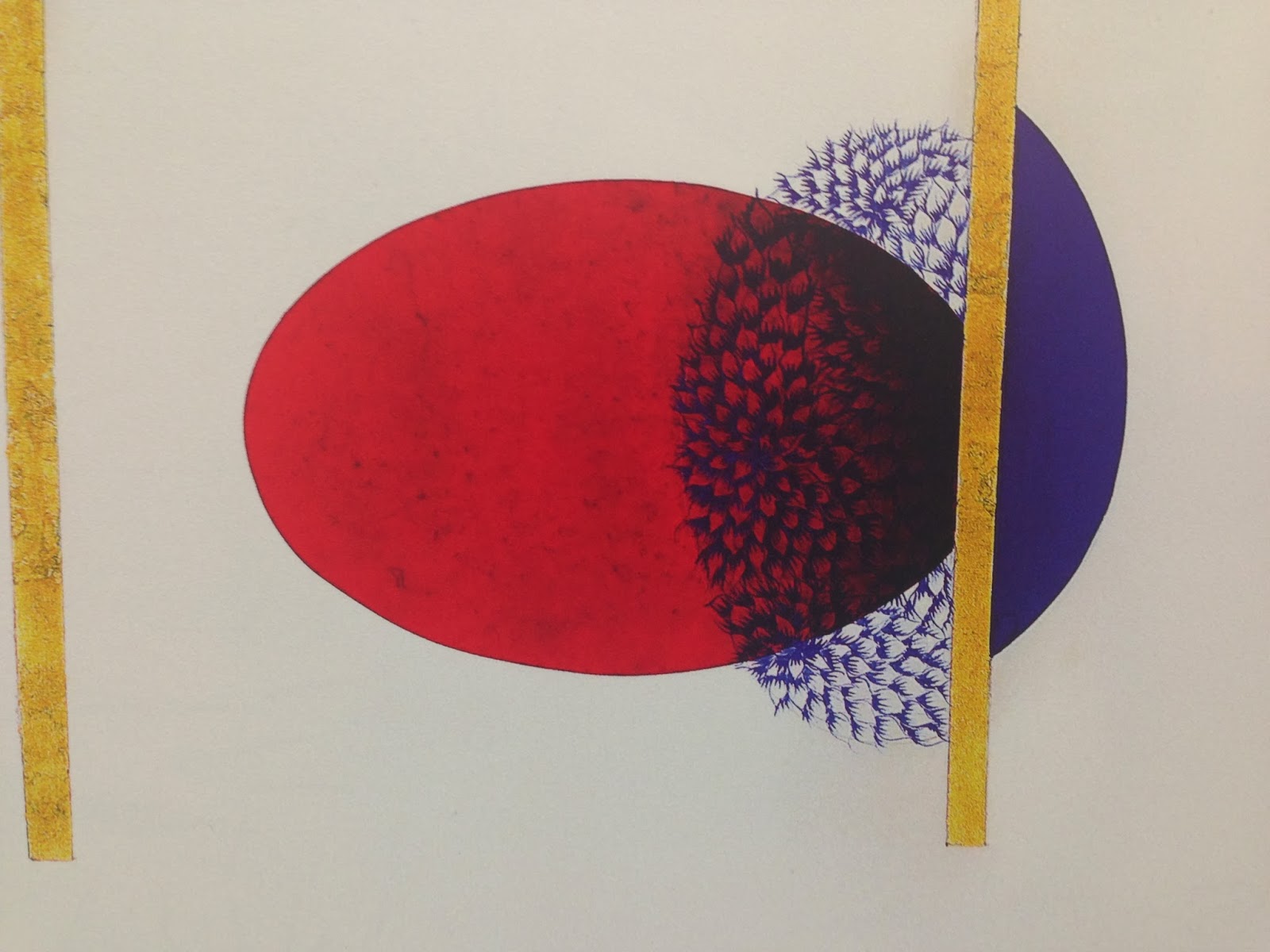
             Today I want to talk about Pakistani artist Imran Qureshi. There is something in his works that keeps me mesmerised. Connection to Arabic patterns, use of colours, his bold and brave ways to fill the space with images of leaves, just leaves, but in their rich variations and concepts.
His drawing technique inspires me in my architectural drawings. I have always liked this combination of brutality and lightness. Leaves are fragile, light, semi-transparent, backgrounds are fairy-tale like.


           In Qureshi’s work, an investigation into ornamentation is both a reference to tradition and a vehicle for criticism: of constricting role models, violent political and religious systems, stereotypes, and conventions. He also transposes the form of miniature painting into site-specific installations in architectural space, addressing both the building itself and its historical and political connotations. His art delves into the constant alternation between violence and hope, destruction and creation, and calls for peaceful resistance and optimism in difficult times.

His new work called "Roof Gardens" commissioned by Metropolitan Museum.
 http://www.metmuseum.org/en/metmedia/video/collections/modern/imran-qureshi
He uses red acrylic, depicting the brutal bombings in Lahore.


                Imran Qureshi (*1972) is regarded one of the most important representatives of Pakistan’s art scene. Schooled in miniature painting, he employs motifs, symbolism, and ornamentation from the Mogul tradition, which blossomed in the north of the Indian subcontinent during the sixteenth and seventeenth centuries. In his unique way, Qureshi combines traditional motifs and techniques with conceptual ideas and contemporary, abstract painting. Observations of reality in contemporary Pakistan flow into his work: reflections on the relationship between the West and the Muslim world, religion, terrorism, and war policy.
With its annual Artist of the Year award, the Deutsche Bank honors promising international artists who, in individual ways, address social issues and have already created an independent, outstanding oeuvre that also includes works on paper and photography.